


Lack of planning is one of the main problems faced in the early months of a venture.
It takes more than just a good idea to create a healthy business; strategic planning is essential for the future of the business and to avoid future risks.
A business plan is the right tool to avoid these problems, offering a clear path to achieving your goals.
Check out our article to learn more about this management resource and how to apply it to your venture.
What is a business plan?
A business plan is a formal document that aims to describe a company’s objectives, strategies, and resources for achieving them.
Its purpose is to serve as a guide for directing the operations and growth of a business, assessing the viability of the venture.
To be considered a business plan, the document must contain:
- Executive summary
- Company description
- Market analysis
- Organization and management
- Products and services
- Marketing and sales planning
- Operational plan
- Financial plan
Having this resource helps guide companies toward success by indicating the best path to follow, managing risks, and administering the organization in the medium and long term.
What is the purpose of a business plan?
This document is one of the first steps in understanding what is needed to start a business.
Its content will help you make strategic decisions that are relevant in both the short and long term.
This allows you to anticipate future problems, reduce likely risks, and increase your chances of success.
In summary, the business plan aims to generate well-structured decisions and offer a good growth outlook.
Is it worth making a business plan?
The business plan works directly with Timmons’ model, which defines the three pillars of entrepreneurship as:
- Opportunity
- Resources
- Team
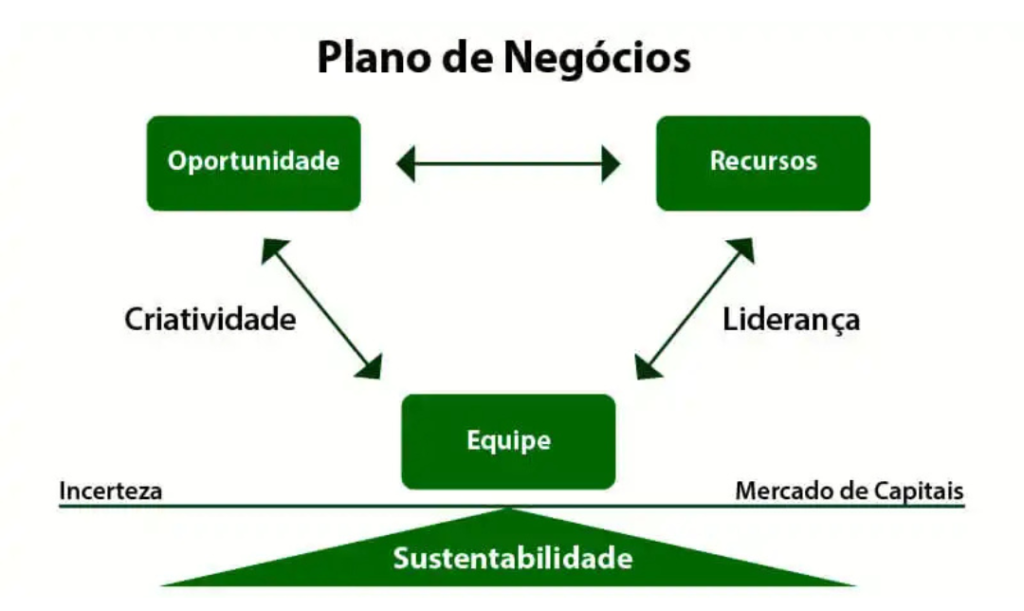
The plan helps identify opportunities and available resources for a business, allowing you to evaluate and balance your value proposition as much as possible with the information available at the time.
In addition, there are other benefits that adopting this document can bring to a business, such as:
Keep expectations realistic
One of the advantages of having this document is that it prevents you from becoming enamored with the idea and losing objectivity when making decisions.
It is important not to fall into this trap of overconfidence, helping you and your partners to remain faithful to the strategic plan and its execution.
Keeping your feet on the ground can be the difference between failed projects and successful ideas.
Understanding the venture in depth
You need to understand your business thoroughly in order to develop a business plan.
You will need to study the market, consumers, competitors, suppliers, and everything related to your business.
All of this will help reduce potential mistakes when executing your actions, in addition to providing fundamental ideas for the value of the business.
How to make a business plan?
The Business Model Canvas is a visual and practical tool that helps you identify the content of your business plan.
Applied in the initial phase, it allows you to identify nine key points about your venture.
Using the model is a great way to put your ideas on paper, helping you organize how the business will work and its value proposition.
Here is an example of a Business Model Canvas:
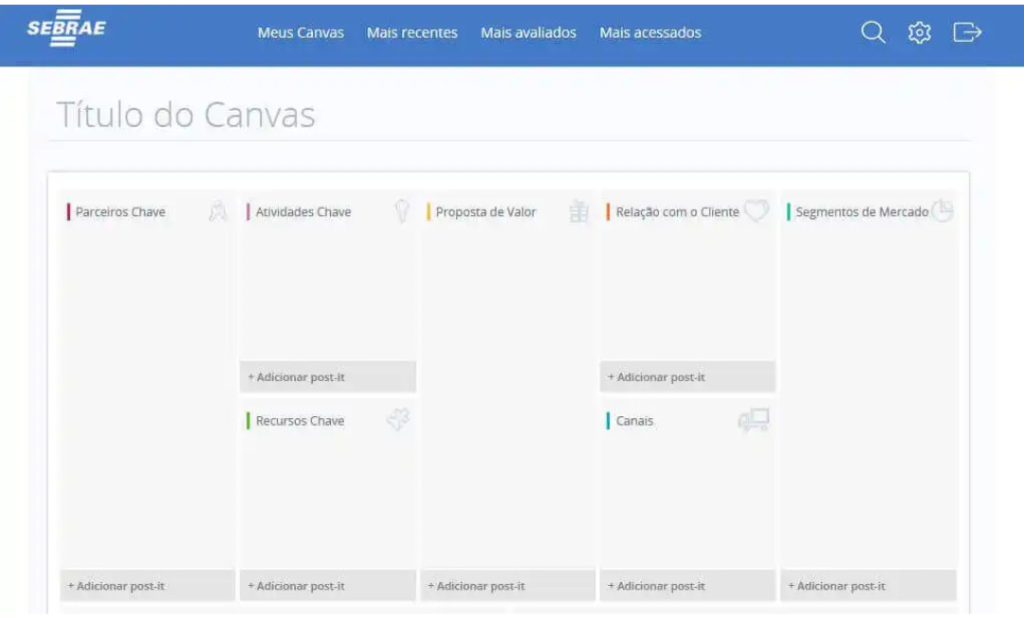
The central block is reserved for the value proposition. The blocks on the right focus on customers, and the blocks on the left organize the delivery of the value proposition.
The blocks at the bottom are related to the financial organization of the business.
Although it is a very simplified model, the Business Canvas Model provides a solid foundation for building your complete business plan.
The more in-depth the content of this document is, the greater your chances of success will be.
However, you need to be well prepared and understand that the process of creating a good version of this document can take a few months.
9 Understanding the divisions of the Business Model Canvas
- Customer segments: the segment in which the company will operate and its target audience.
- Value proposition: what the company will offer to the market, generating value for its customers.
- Channels: which channels the company will use to attract new customers.
- Customer relationships: how the business will establish relationships with its customers.
- Revenue streams: methods the business will use to generate money.
- Key activities: services the company will perform to deliver the value proposition.
- Key resources: resources needed to perform the company’s key activities, including human, material, and logistical resources.
- Key partnerships: strategic partners.
- Cost structures: identification and analysis of all costs necessary for the company’s operations.
Essential elements of a business plan
After developing a Business Model Canvas, it’s time to start building the complete document with ideas, proposals, surveys, and projections.
It’s important to mention and explain, at least minimally, the elements added. That way, anyone who reads the plan will be able to understand its structure, functioning, and objectives.
Check out the key items that need to be included in your plan below:
- Executive Summary: contains a description of the business, competitive advantages, target market, sales projections, and profitability.
- Management Team: résumés of key positions and organizational chart.
- Market Research: presentation of the target audience, market, trends, competitors, and customer needs.
- Economic and Financial Analysis: analysis of sales projections, margins, profitability, break-even point, costs, and time to achieve positive cash flow.
- Marketing Plan: pricing, product, price, and place, in addition to determining the main sales channels and advertising strategies.
- Operational Plan: key elements of the operation, operational processes, regulations, legal matters, logistics, and other matters related to the operation of the business.
- Implementation Plan: SWOT analysis, hiring of employees, plans to generate capital, and scenario analysis.
Ready to create a business plan?
We hope our article has helped you understand what a business plan is and how to create one for your venture.
